“A mathematician may say anything he pleases, but a physicist must be at least partially sane.”
Quoted in R. B. Lindsay, "On the Relation of Mathematics and Physics," Scientific Monthly 59, 456 (Dec. 1944)
Attributed
Джоза́йя Уи́ллард Гиббс — американский физик, физикохимик, математик и механик, один из создателей векторного анализа, статистической физики, математической теории термодинамики, что во многом предопределило развитие современных точных наук и естествознания в целом. Образ Гиббса запечатлён в «Галерее славы великих американцев». Его имя присвоено многим величинам и понятиям химической термодинамики: энергия Гиббса, парадокс Гиббса, правило фаз Гиббса, уравнения Гиббса — Гельмгольца, уравнения Гиббса — Дюгема, лемма Гиббса, треугольник Гиббса — Розебома и др.
В 1901 г. Гиббс был удостоен высшей награды международного научного сообщества того времени — Медали Копли Лондонского королевского общества — за то, что он стал «первым, кто применил второй закон термодинамики для всестороннего рассмотрения соотношения между химической, электрической и тепловой энергией и способностью к совершению работы». Wikipedia
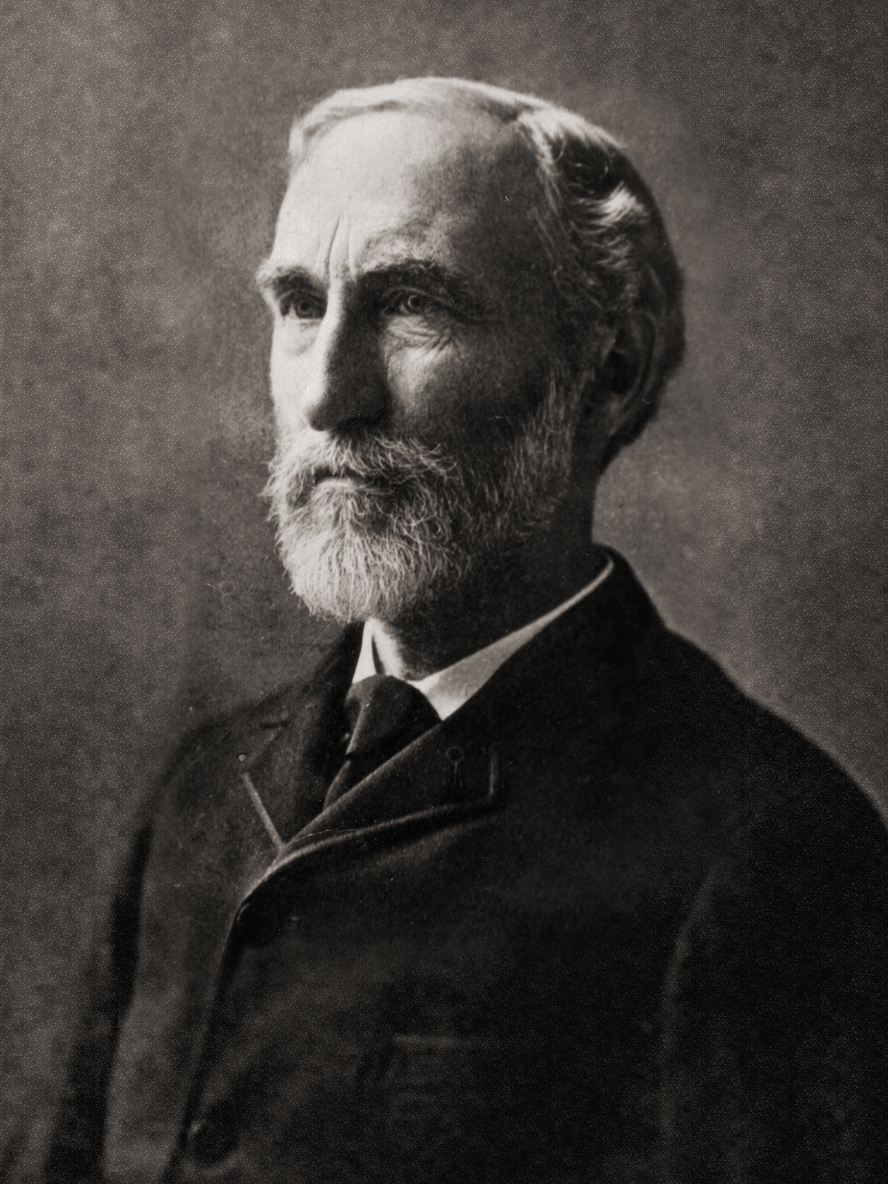
“A mathematician may say anything he pleases, but a physicist must be at least partially sane.”
Quoted in R. B. Lindsay, "On the Relation of Mathematics and Physics," Scientific Monthly 59, 456 (Dec. 1944)
Attributed
From the preface to Elementary Principles in Statististical Mechanics (1902), p. viii. Full book https://archive.org/details/elementaryprinc00gibbgoog
From Gibbs's letter accepting the Rumford Medal (1881). Quoted in A. L. Mackay, Dictionary of Scientific Quotations (London, 1994).
At a Yale faculty meeting, during a discussion of language requirements in the undergraduate curriculum. Quoted in Muriel Rukeyser, Willard Gibbs (Garden City, NY: Doubleday, Doran & Co., 1942), p. 280.
Attributed
Quoted by C. S. Hastings in "Biographical Memoir of Josiah Willard Gibbs 1839-1903," National Academy of Sciences Biographical Memoirs, vol. VI (Washington, D.C.: National Academy of Sciences, 1909), p. 390. Complete memoir http://books.nap.edu/html/biomems/jgibbs.pdf <br class="br">Attributed
From Gibbs's obituary for Rudolf Clausius (1889). See The Collected Works of J. Willard Gibbs, vol. 2 (New York: Longmans, Green and Co., 1928), p. 267. Complete volume http://www.archive.org/details/collectedworksj00longgoog
“The whole is simpler than its parts.”
Quoted by Irving Fisher in "The Applications of Mathematics to the Social Sciences," Bulletin of the American Mathematical Society 36, 225-243 (1930). Full article http://projecteuclid.org/euclid.bams/1183493954 <br class="br">Attributed
“Anyone having these desires will make these researches.”
About his own scientific work. Quoted in Muriel Rukeyser, Willard Gibbs (Garden City, NY: Doubleday, Doran & Co., 1942), p. 431.
Attributed
From Gibbs's obituary for Hubert Anson Newton (1897), in the Biographical Memoirs of the National Academy of Sciences http://www.nasonline.org/publications/biographical-memoirs/memoir-pdfs/hubert-newton.pdf.
From the preface to Elementary Principles in Statististical Mechanics (1902), p. ix.
Quoted in Muriel Rukeyser, Willard Gibbs (Garden City, NY: Doubleday, Doran & Co., 1942), p. 4.
Attributed