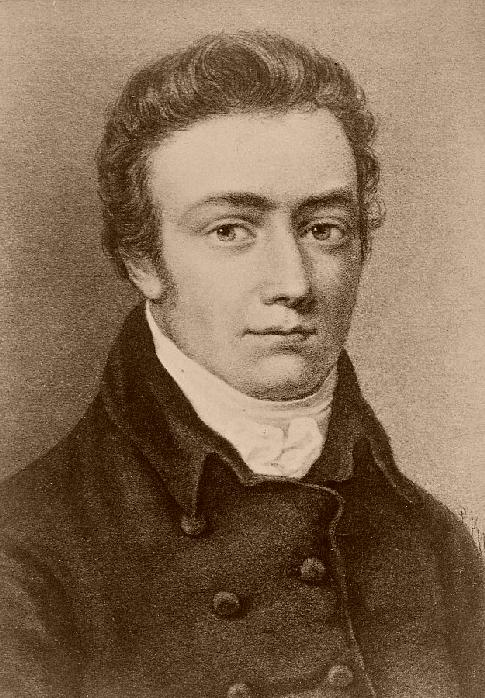
Сэмюэль Тэйлор Кольридж знаменитые цитаты
Сэмюэль Тэйлор Кольридж цитаты
Now Art, used collectively for painting, sculpture, architecture and music, is the mediatress between, and reconciler of, nature and man. It is, therefore, the power of humanizing nature, of infusing the thoughts and passions of man into everything which is the object of his contemplation.
«On Poesy or Art»
Сэмюэль Тэйлор Кольридж: Цитаты на английском языке
Samuel Taylor Coleridge книга The Rime of the Ancient Mariner
Источник: The Rime of the Ancient Mariner
“A light, a glory, a fair luminous cloud
Enveloping the earth.”
Samuel Taylor Coleridge Dejection: An Ode
St. 4
Dejection: An Ode (1802)
Samuel Taylor Coleridge Kubla Khan
Kubla Khan (1797 or 1798)
Контексте: A damsel with a dulcimer
In a vision once I saw:
It was an Abyssinian maid,
And on her dulcimer she played,
Singing of Mount Abora.
Could I revive within me
Her symphony and song,
To such a deep delight 'twould win me,
That with music loud and long,
I would build that dome in air,
That sunny dome! those caves of ice!
And all who heard should see them there,
And all should cry, Beware! Beware!
His flashing eyes, his floating hair!
Weave a circle round him thrice,
And close your eyes with holy dread,
For he on honey-dew hath fed,
And drunk the milk of Paradise.
Samuel Taylor Coleridge книга The Rime of the Ancient Mariner
Источник: The Rime of the Ancient Mariner
18 December 1831
Table Talk (1821–1834)
“Never pursue literature as a trade.”
Samuel Taylor Coleridge книга Biographia Literaria
Источник: Biographia Literaria (1817), Ch. XI
Samuel Taylor Coleridge книга Biographia Literaria
Источник: Biographia Literaria (1817), Ch. XV
Источник: Work Without Hope (1825), l. 1
“A sight to dream of, not to tell!”
Samuel Taylor Coleridge Christabel
Part I, l. 252
Christabel (written 1797–1801, published 1816)
“Common sense in an uncommon degree is what the world calls wisdom.”
Источник: Literary Remains, Vol. 1
Samuel Taylor Coleridge книга Biographia Literaria
Источник: Biographia Literaria (1817), Ch. XIV.
Контексте: The poet, described in ideal perfection, brings the whole soul of man into activity, with the subordination of its faculties to each other according to their relative worth and dignity. He diffuses a tone and spirit of unity, that blends, and (as it were) fuses, each into each, by that synthetic and magical power, to which I would exclusively appropriate the name of Imagination.
Letter to Thomas Poole (16 October 1797).
Letters
Контексте: From my early reading of Faery Tales, & Genii &c &c — my mind had been habituated to the Vast — & I never regarded my senses in any way as the criteria of my belief. I regulated all my creeds by my conceptions not by my sight — even at that age. Should children be permitted to read Romances, & Relations of Giants & Magicians, & Genii? — I know all that has been said against it; but I have formed my faith in the affirmative. — I know no other way of giving the mind a love of "the Great," & "the Whole." — Those who have been led by the same truths step by step thro' the constant testimony of their senses, seem to me to want a sense which I possess — They contemplate nothing but parts — and are parts are necessarily little — and the Universe to them is but a mass of little things. It is true, the mind may become credulous and prone to superstition by the former method; — but are not the experimentalists credulous even to madness in believing any absurdity, rather than believe the grandest truths, if they have not the testimony of their own senses in their favor? I have known some who have been rationally educated, as it is styled. They were marked by a microscopic acuteness; but when they looked at great things, all became a blank, and they saw nothing, and denied that any thing could be seen, and uniformly put the negative of a power for the possession of a power, and called the want of imagination judgment, and the never being moved to rapture philosophy.
“Unchanged within, to see all changed without,
Is a blank lot and hard to bear, no doubt.”
Duty Surviving Self-Love (1826)
Контексте: Unchanged within, to see all changed without,
Is a blank lot and hard to bear, no doubt.
Yet why at others' Wanings should'st thou fret?
Then only might'st thou feel a just regret,
Hadst thou withheld thy love or hid thy light
In selfish forethought of neglect and slight.
" The Presence of Love http://etext.lib.virginia.edu/stc/Coleridge/poems/Presence_Love.html" (1807), lines 1-4.
“Work without Hope draws nectar in a sieve,
And Hope without an object cannot live.”
Источник: Work Without Hope (1825), l. 9.
Контексте: Bloom, O ye Amaranths! bloom for whom ye may,
For me ye bloom not! Glide, rich streams, away!
With lips unbrightened, wreathless brow, I stroll:
And would you learn the spells that drowse my soul?
Work without Hope draws nectar in a sieve,
And Hope without an object cannot live.
1 March 1834.
Table Talk (1821–1834)
Контексте: I am by the law of my nature a reasoner. A person who should suppose I meant by that word, an arguer, would not only not understand me, but would understand the contrary of my meaning. I can take no interest whatever in hearing or saying any thing merely as a fact — merely as having happened. It must refer to something within me before I can regard it with any curiosity or care. My mind is always energic — I don't mean energetic; I require in every thing what, for lack of another word, I may call propriety, — that is, a reason why the thing is at all, and why it is there or then rather than elsewhere or at another time.
Samuel Taylor Coleridge книга Biographia Literaria
Источник: Biographia Literaria (1817), Ch. XIV.
Контексте: This power... reveals itself in the balance or reconcilement of opposite or discordant qualities: of sameness, with difference; of the general with the concrete; the idea with the image; the individual with the representative; the sense of novelty and freshness with old and familiar objects; a more than usual state of emotion with more than usual order; judgment ever awake and steady self-possession with enthusiasm and feeling profound or vehement; and while it blends and harmonizes the natural and the artificial, still subordinates art to nature; the manner to the matter; and our admiration of the poet to our sympathy with the poetry.
"Hymn in the Vale of Chamouni" (1802)
Контексте: Solemnly seemest like a vapoury cloud
To rise before me — Rise, oh, ever rise;
Rise like a cloud of incense from the earth!
Thou kingly spirit throned among the hills,
Thou dread ambassador from earth to heaven,
Great hierarch! tell thou the silent sky,
And tell the stars, and tell yon rising sun,
Earth, with her thousand voices, praises God.
1 March 1834.
Table Talk (1821–1834)
Контексте: I am by the law of my nature a reasoner. A person who should suppose I meant by that word, an arguer, would not only not understand me, but would understand the contrary of my meaning. I can take no interest whatever in hearing or saying any thing merely as a fact — merely as having happened. It must refer to something within me before I can regard it with any curiosity or care. My mind is always energic — I don't mean energetic; I require in every thing what, for lack of another word, I may call propriety, — that is, a reason why the thing is at all, and why it is there or then rather than elsewhere or at another time.
17 April 1823.
Table Talk (1821–1834)
Контексте: Kean is original; but he copies from himself. His rapid descents from the hyper-tragic to the infra-colloquial, though sometimes productive of great effect, are often unreasonable. To see him act, is like reading Shakespeare by flashes of lightning. I do not think him thorough-bred gentleman enough to play Othello.
“Awake, my soul! not only passive praise
Thou owest!”
"Hymn in the Vale of Chamouni" (1802)
Контексте: Awake, my soul! not only passive praise
Thou owest! not alone these swelling tears,
Mute thanks and secret ecstasy. Awake,
Voice of sweet song! awake, my heart, awake!
Green vales and icy cliffs, all join my hymn.
Samuel Taylor Coleridge книга Biographia Literaria
On The Comedy of Errors, in Ch. XV.
Biographia Literaria (1817)
Контексте: The myriad-minded man, our, and all men's, Shakespeare, has in this piece presented us with a legitimate farce in exactest consonance with the philosophical principles and character of farce, as distinguished from comedy and from entertainments. A proper farce is mainly distinguished from comedy by the licence allowed, and even required, in the fable, in order to produce strange and laughable situations. The story need not be probable, it is enough that it is possible.
"Definitions of Poetry" (1811).
Контексте: Poetry is not the proper antithesis to prose, but to science. Poetry is opposed to science, and prose to metre. The proper and immediate object of science is the acquirement, or communication, of truth; the proper and immediate object of poetry is the communication of immediate pleasure.
On the Principles of Genial Criticism (1814)
Контексте: The Good consists in the congruity of a thing with the laws of the reason and the nature of the will, and in its fitness to determine the latter to actualize the former: and it is always discursive. The Beautiful arises from the perceived harmony of an object, whether sight or sound, with the inborn and constitutive rules of the judgment and imagination: and it is always intuitive.
“Flowers are lovely; love is flower-like;
Friendship is a sheltering tree”
"Youth and Age", st. 2 (1823–1832).
Контексте: Flowers are lovely; love is flower-like;
Friendship is a sheltering tree;
Oh the joys that came down shower-like,
Of friendship, love, and liberty,
Ere I was old!
“Bloom, O ye Amaranths! bloom for whom ye may,
For me ye bloom not!”
Источник: Work Without Hope (1825), l. 9.
Контексте: Bloom, O ye Amaranths! bloom for whom ye may,
For me ye bloom not! Glide, rich streams, away!
With lips unbrightened, wreathless brow, I stroll:
And would you learn the spells that drowse my soul?
Work without Hope draws nectar in a sieve,
And Hope without an object cannot live.
“Awake,
Voice of sweet song! awake, my heart, awake!
Green vales and icy cliffs, all join my hymn.”
"Hymn in the Vale of Chamouni" (1802)
Контексте: Awake, my soul! not only passive praise
Thou owest! not alone these swelling tears,
Mute thanks and secret ecstasy. Awake,
Voice of sweet song! awake, my heart, awake!
Green vales and icy cliffs, all join my hymn.


