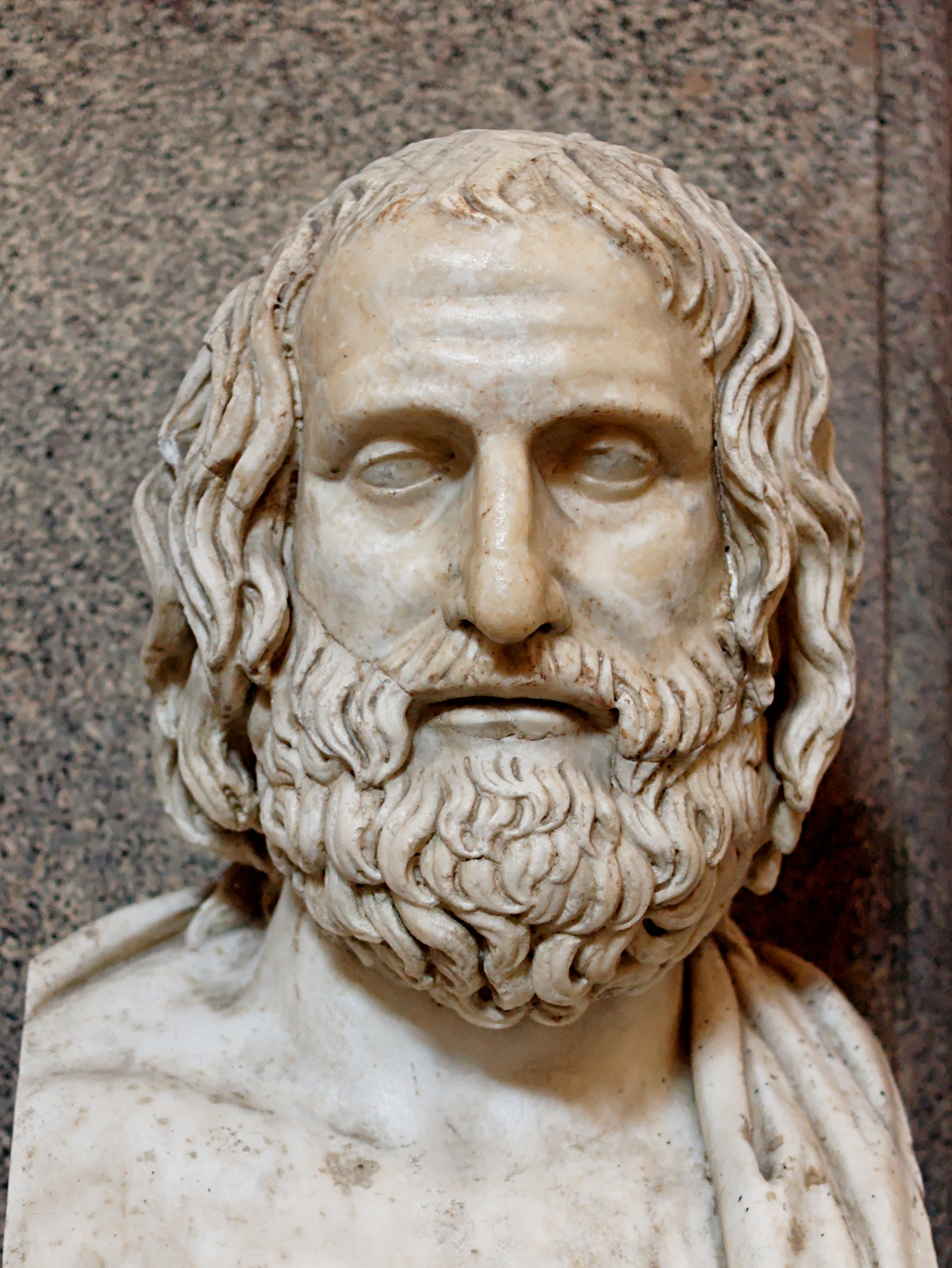
Еврипид знаменитые цитаты
Еврипид Цитаты о мужчинах
Еврипид Цитаты о жизни
Еврипид цитаты
„Ипполит Ой, смотри, Здоров ли ум, коли корона манит.“
ум
Источник: Медея. Ипполит. Вакханки (сборник)
Еврипид: Цитаты на английском языке
Euripidés Bellerophon
Bellerophon, Fragment 298; quoted in Plutarch's Morals : Ethical Essays (1888) edited and translated by Arthur Richard Shilleto, p. 293
“The credit we get for wisdom is measured by our success.”
Euripidés Hippolytus
Источник: Hippolytus (428 BC), l. 701, translated by Edward P. Coleridge
“Slow but sure moves the might of the gods.”
Bacchæ l. 882
Variant translation: Slowly but surely withal moveth the might of the gods.
“I begin by taking. I shall find scholars later to demonstrate my perfect right.”
Supposedly in The Suppliants.
Also attributed to Frederick the Great of Prussia.
Disputed
“I know, indeed, the evil of that I purpose; but my inclination gets the better of my judgment.”
Euripidés Медея
Источник: Medea (431 BC), Line 1078
Sisyphus as translated by R. G. Bury, and revised by J. Garrett
“A second wife is hateful to the children of the first; A viper is not more hateful.”
Euripidés Alcestis
Источник: Alcestis (438 BC), l. 309
“Of all things upon earth that bleed and grow,
A herb most bruised is woman.”
Euripidés Медея
Источник: Medea (431 BC), Lines 230–231 in Gilbert Murray's translation ( p. 15 https://archive.org/stream/medeatranslatedi00euriuoft#page/15/mode/1up)
“Thou didst bring me forth for all the Greeks in common, not for thyself alone.”
Euripidés Iphigenia in Aulis
Iphigenia in Aulis, 1386
Euripidés Медея
Источник: Medea (431 BC), lines 1268-1270; David Kovacs' translation
Euripidés Alcestis
Источник: Alcestis (438 BC), l. 1085
Euripidés книга Hecuba
Hecuba, lines 1178-1182 ( tr. Jay Kardan and Laura-Gray Street (2010) http://didaskalia.net/issues/8/32/) <br class="br">Variant ( tr. E. P. Coleridge (1938) http://data.perseus.org/citations/urn:cts:greekLit:tlg0006.tlg007.perseus-eng1:1145-1186): <br class="br">[I]f any of the men of former times have spoken ill of women, if any does so now, or shall do so hereafter, I will say all this in one short sentence; for neither land or sea produces such a race, as whoever has had to do with them knows.
Euripidés книга Hecuba
Hecuba (424 BC), lines 1177-1182. [Euripides, William Arrowsmith (translated by), Grene, David, Lattimore, Richmond, Euripides III: Four Tragedies, University of Chicago Press, Chicago, IL, USA, 0226307824, paperback] <br class="br">Variant ( tr. Jay Kardan and Laura-Gray Street (2010) http://didaskalia.net/issues/8/32/): <br class="br">Let me tell you, if anyone in the past has spoken<br>ill of women, or speaks so now or will speak so<br>in the future, I’ll sum it up for him: Neither sea<br>nor land has ever produced a more monstrous<br>creature than woman.


