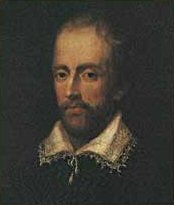
Edmund Spenser знаменитые цитаты
Edmund Spenser: Цитаты на английском языке
Edmund Spenser The Faerie Queene
Источник: The Faerie Queene
Edmund Spenser The Faerie Queene
Canto 12, stanza 34
The Faerie Queene (1589–1596), Book IV
“The noblest mind the best contentment has.”
Edmund Spenser The Faerie Queene
Canto 1, stanza 35
The Faerie Queene (1589–1596), Book I
“And all for love, and nothing for reward.”
Edmund Spenser The Faerie Queene
Canto 8, stanza 2
The Faerie Queene (1589–1596), Book II
“For there is nothing lost, that may be found, if sought.”
Edmund Spenser The Faerie Queene
Источник: The Faerie Queene
“Ah! when will this long weary day have end,
And lende me leave to come unto my love?
- Epithalamion”
Источник: Amoretti and Epithalamion
“I hate the day, because it lendeth light
To see all things, but not my love to see.”
Daphnaida, v. 407; reported in Bartlett's Familiar Quotations, 10th ed. (1919)
“How oft do they their silver bowers leave
To come to succour us that succour want!”
Edmund Spenser The Faerie Queene
Canto 8, stanza 2
The Faerie Queene (1589–1596), Book II
Edmund Spenser Amoretti
Amoretti (1595), Sonnet XVIII https://www.bartleby.com/358/784.html
“Sweete Themmes runne softly, till I end my Song.”
The last line of each stanza
This is often attributed to T. S. Eliot, who does indeed quote it in The Waste Land
Prothalamion (1596)
“Eftsoones they heard a most melodious sound.”
Edmund Spenser The Faerie Queene
Canto 12, stanza 70
The Faerie Queene (1589–1596), Book II
“Ay me, how many perils doe enfold
The righteous man, to make him daily fall!”
Edmund Spenser The Faerie Queene
Canto 8, stanza 1
The Faerie Queene (1589–1596), Book I
“And in his hand a sickle he did holde,
To reape the ripened fruits the which the earth had yold.”
Edmund Spenser The Faerie Queene
Canto 7, stanza 30
The Faerie Queene (1589–1596), Book VII
“But of his cheere did seeme too solemne sad;
Yet nothing did he dread, but ever was ydrad.”
Edmund Spenser The Faerie Queene
Canto 1, stanza 2
The Faerie Queene (1589–1596), Book I
Edmund Spenser The Faerie Queene
Introduction, stanza 1
The Faerie Queene (1589–1596), Book V
Edmund Spenser The Faerie Queene
Canto 8, stanza 11
The Faerie Queene (1589–1596), Book I
“I trow that countenance cannot lie,
Whose thoughts are legible in the eie.”
An Elegie, or Friends Passion, for his Astrophill (1586), line 108
Epithalamion, line 223; reported in Bartlett's Familiar Quotations, 10th ed. (1919)
Edmund Spenser The Faerie Queene
Canto 11, stanza 54
The Faerie Queene (1589–1596), Book III
An Hymne in Honour of Beautie (1596), line 127
“Fierce warres and faithfull loves shall moralize my song.”
Edmund Spenser The Faerie Queene
Introduction, stanza 1
The Faerie Queene (1589–1596), Book I
“For all that Nature by her mother-wit
Could frame in earth.”
Edmund Spenser The Faerie Queene
Canto 10, stanza 21
The Faerie Queene (1589–1596), Book IV
Mother Hubberds Tale, line 895; reported in Bartlett's Familiar Quotations, 10th ed. (1919)
“Tell her the joyous Time will not be staid,
Unlesse she doe him by the forelock take.”
Edmund Spenser Amoretti
Amoretti, lxx; reported in Bartlett's Familiar Quotations, 10th ed. (1919)
“A bold bad man, that dar'd to call by name
Great Gorgon, Prince of darknesse and dead night.”
Edmund Spenser The Faerie Queene
Canto 1, stanza 37
The Faerie Queene (1589–1596), Book I
Lines on his Promised Pension; reported in Thomas Fuller, Worthies of England, vol ii, page 379, and in Bartlett's Familiar Quotations, 10th ed. (1919)
Edmund Spenser книга The Shepheardes Calender
The Shepheardes Calender, July, line 97; reported in Bartlett's Familiar Quotations, 10th ed. (1919)
Edmund Spenser The Faerie Queene
Canto 6, stanza 12
The Faerie Queene (1589–1596), Book II
“And is there care in Heaven? And is there love
In heavenly spirits to these Creatures bace?”
Edmund Spenser The Faerie Queene
Canto 8, stanza 1
The Faerie Queene (1589–1596), Book II


