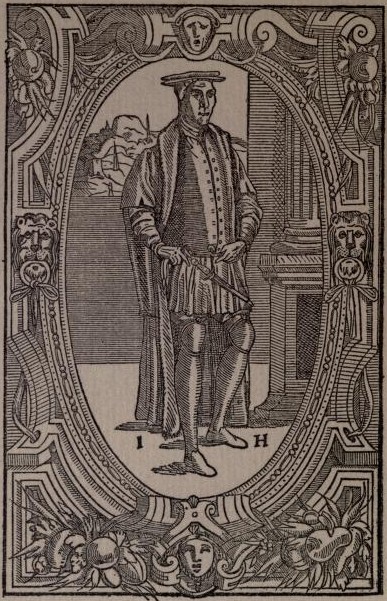
Джон Хейвуд знаменитые цитаты
Джон Хейвуд: Цитаты на английском языке
“I know on which side my bread is buttred.”
Part II, chapter 7.
Proverbs (1546), Bartlett's Familiar Quotations, 10th ed. (1919)
“Time trieth troth in every doubt.”
Part II, chapter 5.
Proverbs (1546), Bartlett's Familiar Quotations, 10th ed. (1919)
“All is not Gospell that thou doest speake.”
Part II, chapter 2.
Proverbs (1546), Bartlett's Familiar Quotations, 10th ed. (1919)
“Now for good lucke, cast an old shooe after me.”
Part I, chapter 9.
Proverbs (1546), Bartlett's Familiar Quotations, 10th ed. (1919)
“Might have gone further and have fared worse.”
Part II, chapter 4.
Proverbs (1546), Bartlett's Familiar Quotations, 10th ed. (1919)
“Shee had seene far in a milstone.”
Part I, chapter 10.
Proverbs (1546), Bartlett's Familiar Quotations, 10th ed. (1919)
“Whan the sunne shinth make hay, whiche is to say,
Take time whan time comth, lest time steale away.”
When the sun shines make hay, which is to say,
Take time when time comes, lest time steal away.
Part I, chapter 3.
Proverbs (1546)
“Out of Gods blessing into the warme Sunne.”
Part II, chapter 5.
Proverbs (1546), Bartlett's Familiar Quotations, 10th ed. (1919)
“While the grasse groweth the horse starveth.”
Part I, chapter 11.
Proverbs (1546), Bartlett's Familiar Quotations, 10th ed. (1919)
Though you love not to buy the pig in the poke,
Yet snatch you at the poke, that the pig is in,
Not for the poke, but the pig good cheap to win.
Part II, chapter 9.
Proverbs (1546)
“Small pitchers have wyde eares.”
Part II, chapter 5.
Proverbs (1546), Bartlett's Familiar Quotations, 10th ed. (1919)
“Well aunt (quoth Ales) all is well that endes well.
Ye Ales, of a good begynnyng comth a good end.”
Well aunt, said Ales, all is well that ends well.
Yes Ales, of a good beginning comes a good end.
Part I, chapter 10.
Proverbs (1546)
“He that will not whan he may,
Whan he would, he shall haue nay.”
He that will not when he may,
When he would, he shall have nay.
Part I, chapter 3.
Proverbs (1546)
True, said Ales, things done can not be undone,
Be they done in due time, too late, or too soon,
But better late than never to repent this,
To late, said my aunt, this repentance shown is,
When the steed is stolen shut the stable door.
Part I, chapter 10
"Better late than never" is recorded earlier by Livy as Potius sero quam numquam. (book IV, sec. 23).
Proverbs (1546)
“Men say, kinde will creepe where it may not goe.”
Part I, chapter 11.
Proverbs (1546), Bartlett's Familiar Quotations, 10th ed. (1919)
“Wolde ye bothe eate your cake, and haue your cake?”
Would you both eat your cake, and have your cake?
Part II, chapter 9.
Proverbs (1546)
“Lyke a pyckpurs pilgrim, ye prie and ye proule
At rouers, to rob Peter and paie Poule.”
Like a pickpurse pilgrim, you pry and you prowl
At rovers, to rob Peter and pay Paul.
Part I, chapter 11.
Proverbs (1546)
“Feare may force a man to cast beyond the moone.”
Part I, chapter 4.
Proverbs (1546), Bartlett's Familiar Quotations, 10th ed. (1919)
“What man love me, love my dog.”
Part II, chapter 9
Recorded in the 11th century by Bernard of Clairvaux in one of his sermons as a common proverb.
Proverbs (1546)
Part I, chapter 3.
Proverbs (1546)
And while I at length debate and beat the bush,
There shall step in other men, and catch the birds,
And by long time lost in many vain words.
Part I, chapter 3.
Proverbs (1546)
Mark you, how she hits me on the thumbs, said he.
And you taunt me tit over thumb, said she.
Since tit for tat, said I, on even hand is set.
Part II, chapter 4.
Proverbs (1546)
Part I, chapter 11.
Proverbs (1546), Bartlett's Familiar Quotations, 10th ed. (1919)
“Who waite for dead men shall goe long barefoote.”
Part I, ch 9.
Proverbs (1546)
“Reckeners without their host must recken twice.”
Part I, chapter 8.
Proverbs (1546), Bartlett's Familiar Quotations, 10th ed. (1919)
“To robbe Peter and pay Poule.”
Part I, chapter 11.
Proverbs (1546), Bartlett's Familiar Quotations, 10th ed. (1919)
“… Be they wynners or loosers,
… beggers should be no choosers.”
… Be they winners or loosers,
… beggars should be not choosers.
Part I, chapter 10.
Proverbs (1546)
“The more hast the lesse speede.”
The more haste the less speed.
Part I, chapter 2.
Proverbs (1546)
Part II, chapter 9.
Proverbs (1546), Bartlett's Familiar Quotations, 10th ed. (1919)
“Children and fooles cannot lye.”
Part I, chapter 11.
Proverbs (1546), Bartlett's Familiar Quotations, 10th ed. (1919)
Вариант: Children and fooles cannot lye.


