Эта цитата ждет обзора.
жуки
Источник: Кольцо царя Соломона
Ко́нрад Захариас Ло́ренц — выдающийся австрийский зоолог и зоопсихолог, один из основоположников этологии — науки о поведении животных, лауреат Нобелевской премии по физиологии или медицине .
В 2015 году был посмертно лишён почётной докторской степени университета в Зальцбурге в связи с «приверженностью идеологии нацизма». Wikipedia
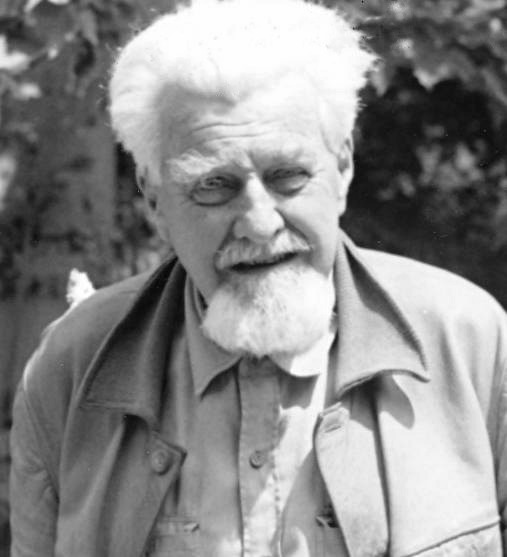
жуки
Источник: Кольцо царя Соломона
„Экстраординарные формы цикад были созданы исключительно для того, чтобы отпугивать птиц.“
цикады
Источник: Кольцо царя Соломона
Konrad Lorenz книга On Aggression
Источник: On Aggression (1963), Ch. XII : On the Virtue of Scientific Humility
Контексте: We are the highest achievement reached so far by the great constructors of evolution. We are their "latest" but certainly not their last word. The scientist must not regard anything as absolute, not even the laws of pure reason. He must remain aware of the great fact, discovered by Heraclitus, that nothing whatever really remains the same even for one moment, but that everything is perpetually changing. To regard man, the most ephemeral and rapidly evolving of all species, as the final and unsurpassable achievement of creation, especially at his present-day particularly dangerous and disagreeable stage of development, is certainly the most arrogant and dangerous of all untenable doctrines. If I thought of man as the final image of God, I should not know what to think of God. But when I consider that our ancestors, at a time fairly recent in relation to the earth's history, were perfectly ordinary apes, closely related to chimpanzees, I see a glimmer of hope. It does not require very great optimism to assume that from us human beings something better and higher may evolve. Far from seeing in man the irrevocable and unsurpassable image of God, I assert – more modestly and, I believe, in greater awe of the Creation and its infinite possibilities – that the long-sought missing link between animals and the really humane being is ourselves!
Konrad Lorenz книга On Aggression
Источник: On Aggression (1963), Ch. XII : On the Virtue of Scientific Humility
Контексте: Nobody can seriously believe that free will means that it is left entirely to the will of the individual, as to an irresponsible tyrant, to do or not do whatever he pleases. Our freest will underlies strict moral laws, and one of the reasons for our longing for freedom is to prevent our obeying other laws than these. It is significant that the anguished feeling of not being free is never evoked by the realisation that our behaviour is just as firmly bound to moral laws as physiological processes are to physical ones. We are all agreed that the greatest and most precious freedom of man is identical with the moral laws within him. Increasing knowledge of the natural causes of his own behaviour can certainly increase a man's faculties and enable him to put his free will into action, but it can never diminish his will. If, in the impossible case of an utopian complete and ultimate success of causal analysis, man should ever achieve complete insight into the causality of earthly phenomena, including the workings of his own organism, he would not cease to have a will but it would be in perfect harmony with the incontrovertible lawfulness of the universe, the Weltvernunft of the Logos. This idea is foreign only to our present-day western thought; it was quite familiar to ancient Indian philosophy and to the mystics of the middle ages.
Konrad Lorenz книга On Aggression
Источник: On Aggression (1963), Ch. XII : On the Virtue of Scientific Humility
Контексте: We are the highest achievement reached so far by the great constructors of evolution. We are their "latest" but certainly not their last word. The scientist must not regard anything as absolute, not even the laws of pure reason. He must remain aware of the great fact, discovered by Heraclitus, that nothing whatever really remains the same even for one moment, but that everything is perpetually changing. To regard man, the most ephemeral and rapidly evolving of all species, as the final and unsurpassable achievement of creation, especially at his present-day particularly dangerous and disagreeable stage of development, is certainly the most arrogant and dangerous of all untenable doctrines. If I thought of man as the final image of God, I should not know what to think of God. But when I consider that our ancestors, at a time fairly recent in relation to the earth's history, were perfectly ordinary apes, closely related to chimpanzees, I see a glimmer of hope. It does not require very great optimism to assume that from us human beings something better and higher may evolve. Far from seeing in man the irrevocable and unsurpassable image of God, I assert – more modestly and, I believe, in greater awe of the Creation and its infinite possibilities – that the long-sought missing link between animals and the really humane being is ourselves!
Konrad Lorenz книга On Aggression
Источник: On Aggression (1963), Ch. XII : On the Virtue of Scientific Humility
Контексте: We are the highest achievement reached so far by the great constructors of evolution. We are their "latest" but certainly not their last word. The scientist must not regard anything as absolute, not even the laws of pure reason. He must remain aware of the great fact, discovered by Heraclitus, that nothing whatever really remains the same even for one moment, but that everything is perpetually changing. To regard man, the most ephemeral and rapidly evolving of all species, as the final and unsurpassable achievement of creation, especially at his present-day particularly dangerous and disagreeable stage of development, is certainly the most arrogant and dangerous of all untenable doctrines. If I thought of man as the final image of God, I should not know what to think of God. But when I consider that our ancestors, at a time fairly recent in relation to the earth's history, were perfectly ordinary apes, closely related to chimpanzees, I see a glimmer of hope. It does not require very great optimism to assume that from us human beings something better and higher may evolve. Far from seeing in man the irrevocable and unsurpassable image of God, I assert – more modestly and, I believe, in greater awe of the Creation and its infinite possibilities – that the long-sought missing link between animals and the really humane being is ourselves!
Konrad Lorenz книга Civilized Man's Eight Deadly Sins
pp 45-47
Civilized Man's Eight Deadly Sins (1973)
Контексте: The competition between human beings destroys with cold and diabolic brutality.... Under the pressure of this competitive fury we have not only forgotten what is useful to humanity as a whole, but even that which is good and advantageous to the individual.... One asks, which is more damaging to modern humanity: the thirst for money or consuming haste... in either case, fear plays a very important role: the fear of being overtaken by one's competitors, the fear of becoming poor, the fear of making wrong decisions or the fear of not being up to snuff.
Источник: Lads Before the Wind: Diary of a Dolphin Trainer
Konrad Lorenz книга On Aggression
Источник: On Aggression (1963), Ch. XII : On the Virtue of Scientific Humility
Konrad Lorenz книга On Aggression
Ch. XII : On the Virtue of Scientific Humility http://www.marxists.org/reference/subject/philosophy/works/ge/lorenz.htm <br class="br">On Aggression (1963)
Konrad Lorenz книга On Aggression
Источник: On Aggression (1963), Ch. XII : On the Virtue of Scientific Humility
Konrad Lorenz книга Civilized Man's Eight Deadly Sins
Civilized Man's Eight Deadly Sins (1973)
Konrad Lorenz книга On Aggression
Источник: On Aggression (1963), Ch. XII : On the Virtue of Scientific Humility
Konrad Lorenz книга On Aggression
Источник: On Aggression (1963), Ch. XIII : Ecce Homo!
Konrad Lorenz книга On Aggression
Trans. M. Latzke (1966), p. 8
On Aggression (1963)
Konrad Lorenz книга On Aggression
Источник: On Aggression (1963), Ch. XII : On the Virtue of Scientific Humility


