„Нельзя применять многочисленности без необходимости.“
Quaestiones et decisiones in quattuor libros Sententiarum Petri Lombardi (ed. Lugd., 1495), i, dist. 27, qu. 2K
Numquam ponenda est pluralitas sine necessitate.
Бритва Оккама
Уи́льям О́ккам — английский философ, францисканский монах из Оккама, маленькой деревни в графстве Суррей в Южной Англии. Сторонник номинализма, считал, что существует только индивидуальное, а универсалии существуют только благодаря абстрактному мышлению в человеческом уме, а помимо этого не обладают никакой метафизической сущностью. Считается одним из отцов современной эпистемологии и современной философии в целом, а также одним из величайших логиков всех времён. Wikipedia
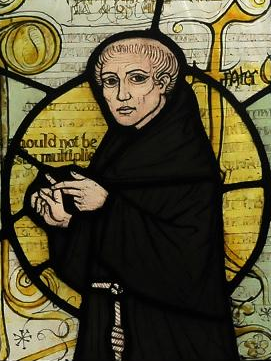
„Нельзя применять многочисленности без необходимости.“
Quaestiones et decisiones in quattuor libros Sententiarum Petri Lombardi (ed. Lugd., 1495), i, dist. 27, qu. 2K
Numquam ponenda est pluralitas sine necessitate.
Бритва Оккама
„Не следует привлекать новые сущности без крайней на то необходимости.“
Не следует множить сущее без необходимости.
„Напрасно пытаться посредством большего делать то, что может быть сделано посредством меньшего.“
Summa Totius Logicae, i. 12
Frustra fit per plura quod potest fieri per pauciora.
Бритва Оккама
„Сущности не следует умножать без необходимости.“
В действительности эта формулировка высказал не сам Оккам, а философ Йоханес Клауберт в 1654 году. Но некоторые короткие фразы Оккама можно рассматривать как прототипы настоящего постулата.
Entia non sunt multiplicanda praeter necessitatem.
Бритва Оккама
в отличие от Фомы Аквинского: «В науке и философии не может быть признано истинным то, что является ложным, с точки зрения теологии…»
„Ты защищать будешь меня мечом, а я тебя – словом.“
легендарные слова, отправленные якобы германскому императору Людвигу IV Баварскому, у которого Оккам вынужден искать защиты в 1328 г. от гнева папы, недовольного его научными заявлениями
Приписываемые
“With all things being equal, the simplest explanation tends to be the right one.”
Вариант: The simplest explanation is usually the right one
Opera Theologica (1986), edited by Gedeon Gal, Vol. I, p. 31.
Vol. I, Book 1, Ch. 2 http://www.britac.ac.uk/pubs/dialogus/t1d1.html, as translated by John Kilcullen and John Scott (2003). <br class="br">Dialogus (1494) <br class="br">Контексте: It is on account of theology alone that any assertion whatsoever should be called catholic or heretical. For only an assertion which is consonant with theology is truly catholic, and only one which is known to be opposed to theology is known to be heretical. For if some assertion were found to be opposed to decrees of the highest pontiffs, or also of general councils or also to laws of the emperors, nevertheless, if it were not in conflict with theology, even if it could be considered false, erroneous or unjust, it should not be counted as a heresy.
“Logic is the most useful tool of all the arts. Without it no science can be fully known.”
William of Ockham книга Sum of Logic
Summa Logicae (c. 1323), Prefatory Letter, as translated by Paul Vincent Spade (1995) http://www.pvspade.com/Logic/docs/ockham.pdf <br class="br">Контексте: Logic is the most useful tool of all the arts. Without it no science can be fully known. It is not worn out by repeated use, after the manner of material tools, but rather admits of continual growth through the diligent exercise of any other science. For just as a mechanic who lacks a complete knowledge of his tool gains a fuller [knowledge] by using it, so one who is educated in the firm principles of logic, while he painstakingly devotes his labor to the other sciences, acquires at the same time a greater skill at this art.
“It is pointless to do with more what can be done with fewer.”
Frustra fit per plura, quod potest fieri per pauciora.
Summa Totius Logicae, i. 12, cited in "Ockham's Razor" by Paul Newall at Galilean Library (25 June 2005) http://www.galilean-library.org/manuscript.php?postid=43832
"A Letter to the Friars Minor" (1334) as translated in A Letter to the Friars Minor and other Writings (1995) edited by A. S. McGrade and John Kilcullen, p. 204.
Контексте: The head of Christians does not, as a rule, have power to punish secular wrongs with a capital penalty and other bodily penalties and it is for thus punishing such wrongs that temporal power and riches are chiefly necessary; such punishment is granted chiefly to the secular power. The pope therefore, can, as a rule, correct wrongdoers only with a spiritual penalty. It is not, therefore, necessary that he should excel in temporal power or abound in temporal riches, but it is enough that Christians should willingly obey him.
Vol. I, Book 1, Ch. 2.
Dialogus (1494)
Контексте: The Holy Spirit through blessed John the evangelist makes a terrible threat against those who add anything to or take anything from divine scripture when he says in the last chapter of Revelations [22:18–9], "If any man shall add to these things, God shall add unto him the plagues which are in this book. And if any man shall take away from the words of the book of this prophecy, God shall take his part out of the book of life and out of the holy city, and from these things that are written in this book." We clearly gather from all these that nothing should be added to sacred scripture nor anything removed from it. To decide by way of teaching, therefore, which assertion should be considered catholic, which heretical, chiefly pertains to theologians, the experts on divine scripture.
You see that I have set out opposing assertions in response to your question and I have touched on quite strong arguments in support of each position. Therefore consider now which seems the more probable to you.
“Plurality is never to be posited without necessity.”
Numquam ponenda est pluralitas sine necessitate
Quaestiones et decisiones in quattuor libros Sententiarum Petri Lombardi [Questions and the decisions of the Sentences of Peter Lombard] (1495), i, dist. 27, qu. 2, K; also in The Development of Logic (1962), by William Calvert Kneale, p. 243; similar statements were common among Scholastic philosophers, at least as early as John Duns (Duns Scotus).
Pluralitas non est ponenda sine necessitate.
As cited in "The Myth of Occam's Razor" by William Thorburn, in Mind, Vol. 27 (1918), 345–353.
Vol. I, Book 2, Ch. 22 http://www.britac.ac.uk/pubs/dialogus/t1d2b.html, as translated by John Scott (1999) <br class="br">Dialogus (1494)
“Entities should not be multiplied beyond necessity.”
Entia non sunt multiplicanda praeter necessitatem.
Though widely cited as Occam's razor, this popular wording is not found in his extant works.
Misattributed
We clearly gather from all these that nothing should be added to sacred scripture nor anything removed from it. To decide by way of teaching, therefore, which assertion should be considered catholic, which heretical, chiefly pertains to theologians, the experts on divine scripture.
You see that I have set out opposing assertions in response to your question and I have touched on quite strong arguments in support of each position. Therefore consider now which seems the more probable to you.
Vol. I, Book 1, Ch. 2.
Dialogus (1494)


