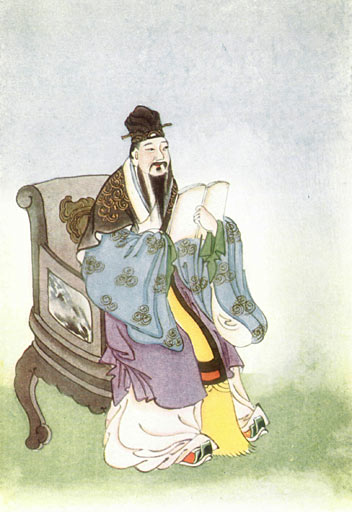
Мэн-цзы знаменитые цитаты
Мэн-цзы: Цитаты на английском языке
Book 1, part 1, as translated by James Legge in The Life and Works of Mencius (1875), p. 124<!--. Variant translation:
Once [Mencius] visited a king, and the king asked him, "Old teacher, how can my country profit from your presence?" Mencius immediately replied, "Why do you speak of profit, sire? Isn't there also the sense of mercy and the sense of right?"
As translated by Lin Yutang in From Pagan to Christian (1959), p. 90-->
The Mencius
Контексте: Mencius went to see King Huei of Liang. The king said, "Venerable sir, since you have not counted it far to come here, a distance of a thousand li, may I presume that you are provided with counsels to profit my kingdom?" Mencius replied, "Why must your Majesty use that word 'profit'? What I am provided with, are counsels to benevolence and righteousness, and these are my only topics."
“The feeling of commiseration is the beginning of humanity”
2A:6, as translated by Wing-tsit Chan in A Source Book in Chinese Philosophy (1963), p. 65
Variant translation: The sense of compassion is the beginning of benevolence; the sense of shame the beginning of righteousness; the sense of modesty the beginning of decorum; the sense of right and wrong the beginning of wisdom. Man possesses these four beginnings just as he possesses four limbs. Anyone possessing these four and saying that he can not do what is required of him is abasing himself.
The Mencius
Контексте: The feeling of commiseration is the beginning of humanity; the feeling of shame and dislike is the beginning of righteousness; the feeling of deference and compliance is the beginning of propriety; and the feeling of right or wrong is the beginning of wisdom.
Men have these Four Beginnings just as they have their four limbs. Having these Four Beginnings, but saying that they cannot develop them is to destroy themselves.
7B:14. Variant translation: The people are the most important ... and the ruler is the least important.
The people are the most important element in a nation; the spirits of the land and grain come next; the sovereign counts for the least. note: Most precious are the people; next come the spirits of land and grain; and last, the princes. note: The people are the most important ... and the ruler is the least important.
The Mencius
“The great man is the one who does not lose his child's heart.”
Book 4, pt. 2, v. 12
Variant translations by Lin Yutang:
A great man is one who has not lost the child's heart.
A great man is he who has not lost the heart of a child.
The Mencius
“Before a man can do things there must be things he will not do.”
Eugene H. Peterson, A Long Obedience in the Same Direction, IVP, start of Ch 2.
Attributed
Источник: Also quoted elsewhere and attributed to Mencius as "Only when there are things a man will not do is he capable of doing great things," again with no source.
“Most precious are the people; next come the spirits of land and grain; and last, the kings.”
(zh-TW) 民為貴,社稷次之,君為輕。
7B:14. Variant translations:
Of the first importance are the people, next comes the good of land and grains, and of the least importance is the ruler.
The people are the most important ... and the ruler is the least important.
The Mencius
Вариант: The people are the most important element in a nation; the spirits of the land and grain come next; the sovereign counts for the least.
1B:8, In relation to righteousness and the overthrow of the tyrannous King Zhou of Shang, as translated in China (1904) by Sir Robert Kennaway Douglas, p. 8
Variant translations:
The ruffian and the villain we call a mere fellow. I have heard of killing the fellow Chou; I have not heard of killing a king.
As translated in Free China Review, Vol. 5 (1955)
I have merely heard of killing a villain Zhou, but I have not heard of murdering the ruler.
1B:8 as translated by Wing-tsit Chan in A Source Book in Chinese Philosophy (1963), p. 78
The Mencius
Контексте: He who outrages benevolence is called a ruffian: he who outrages righteousness is called a villain. I have heard of the cutting off of the villain Chow, but I have not heard of the putting of a ruler to death.
“Having these Four Beginnings, but saying that they cannot develop them is to destroy themselves.”
2A:6, as translated by Wing-tsit Chan in A Source Book in Chinese Philosophy (1963), p. 65
Variant translation: The sense of compassion is the beginning of benevolence; the sense of shame the beginning of righteousness; the sense of modesty the beginning of decorum; the sense of right and wrong the beginning of wisdom. Man possesses these four beginnings just as he possesses four limbs. Anyone possessing these four and saying that he can not do what is required of him is abasing himself.
The Mencius
Контексте: The feeling of commiseration is the beginning of humanity; the feeling of shame and dislike is the beginning of righteousness; the feeling of deference and compliance is the beginning of propriety; and the feeling of right or wrong is the beginning of wisdom.
Men have these Four Beginnings just as they have their four limbs. Having these Four Beginnings, but saying that they cannot develop them is to destroy themselves.
“They who accord with Heaven are preserved, and they who rebel against Heaven perish.”
Book 4, part 1, ch. 7
The Mencius
“He who exerts his mind to the utmost knows his nature.”
7A:1, as translated by Wing-tsit Chan in A Source Book in Chinese Philosophy (1963), p. 62
The Mencius
“The way of learning is none other than finding the lost mind.”
6A:11, as translated by Wing-tsit Chan in A Source Book in Chinese Philosophy (1963), p. 58
The Mencius
“If the king loves music, there is little wrong in the land.”
Discourses, as quoted in "I Want to Know!" by Ivan Gogol Esipoff, The Etude, Vol. LXIII, No. 9 (September 1945), p. 496
7A:20, as translated by James Legge in The Chinese Classics, Vol. II (1861), p. 335
The Mencius


